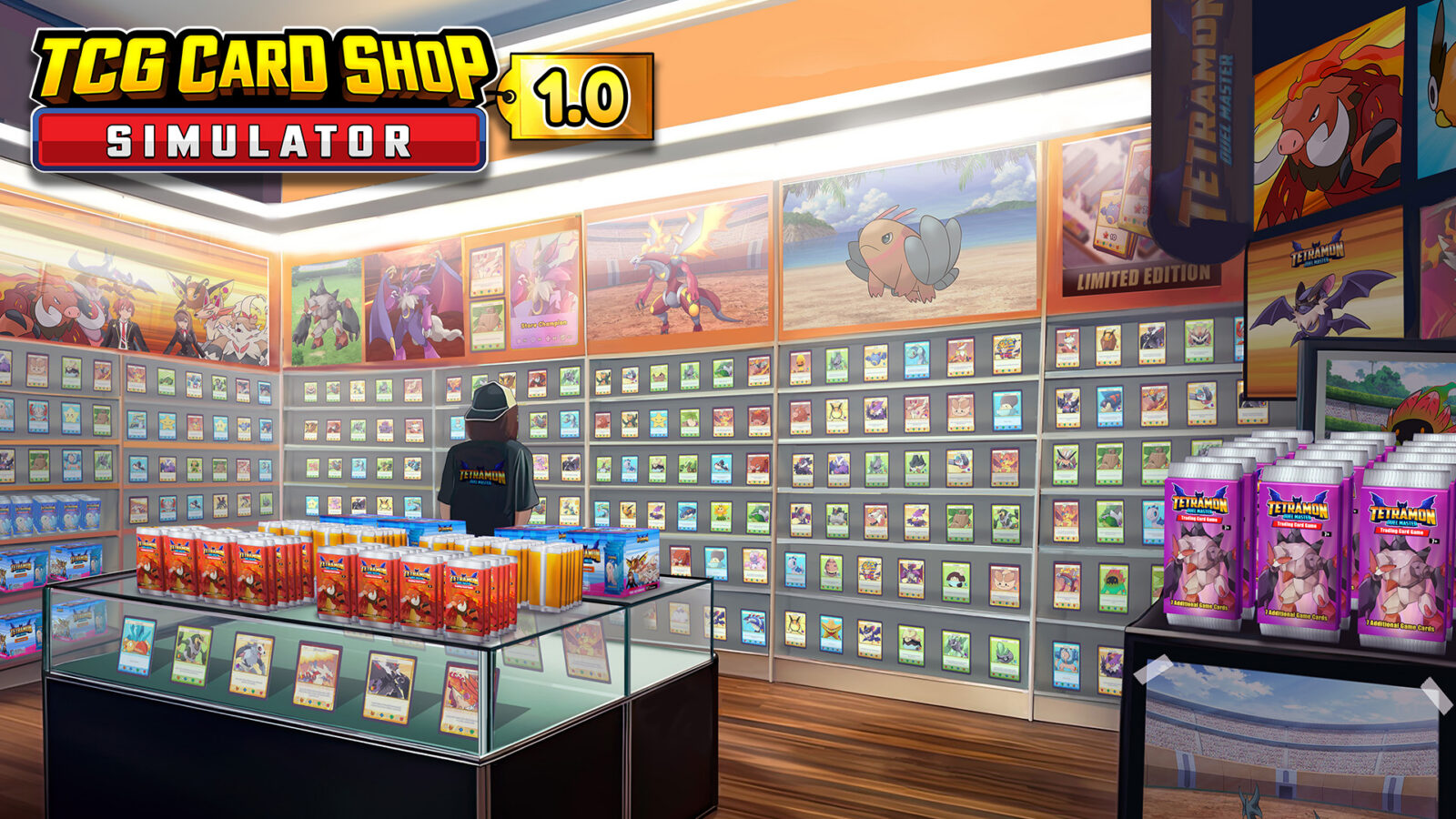
TCG Card Shop Simulator Steam: The Ultimate Management Guide
Master TCG Card Shop Simulator Steam with our comprehensive guide on shop expansion, Tetrammon card collecting, and deck building to maximize your profits.
Published:
Table of Contents
Ever dreamed of owning your own local game store, cracking open booster packs, and building a community of dedicated players? With the full release of TCG Card Shop Simulator Steam, that dream is now a highly detailed digital reality. Developed by OPNeon Games, this simulation title has captured the hearts of thousands by blending the stressful yet rewarding world of retail management with the addictive nature of trading card collecting. Whether you are a newcomer or a veteran of the early access period, mastering TCG Card Shop Simulator Steam requires a balance of economic strategy, layout optimization, and a deep understanding of the in-game card game, Tetrammon.
In this guide, we will dive deep into every facet of the game, from setting up your first shelf to hosting high-stakes tournaments. We will explore the nuances of the market, the secrets of rare card hunting, and the tactical depth of the card battling system recently introduced in the 1.0 version. If you want to transform your small shop into a sprawling TCG empire, you have come to the right place.
Getting Started: Your First Days in TCG Card Shop Simulator
When you first launch TCG Card Shop Simulator Steam, you are greeted with a modest space and a limited budget. Your primary goal is to establish a consistent revenue stream by selling booster packs and basic card supplies. The gameplay loop is deceptively simple: order stock, set prices, checkout customers, and reinvest your profits. However, the complexity lies in the timing and efficiency of these actions.
Initially, your focus should be on "Tetrammon" booster packs, the core product of the game. According to community reports, players who diversify their stock too early often find themselves struggling with cash flow. It is better to have a full shelf of one popular item than a scattering of various products that customers might not be looking for yet.
Quick Start Priorities
Stock the Essentials: Focus on basic booster packs and card sleeves.
Pricing Strategy: Start by pricing items slightly above the market average (around 5-10%) to maximize early margins.
Manual Labor: In the beginning, you will be the cashier, stocker, and cleaner. Embrace the grind to save on early staff costs.
Initial Task
Importance
Reason
Ordering Stock
Critical
You cannot make money if your shelves are empty.
Setting Prices
High
Market prices fluctuate; keeping them updated ensures you don't lose profit.
Cleaning the Shop
Medium
Dirty shops lead to negative customer reviews and lower foot traffic.
Opening Packs
Low
While tempting, selling packs is more reliable for early-game growth.
Mastering the Retail Economy and Shop Expansion
As your shop grows, so does the complexity of the market. TCG Card Shop Simulator Steam features a dynamic pricing system where the value of cards and packs shifts daily. Successful managers spend the first few minutes of every in-game day checking the market app on their phone to adjust prices accordingly.
Expanding your shop is not just about making the room bigger; it’s about increasing the "flow" of customers. Community experience suggests that a cramped shop leads to bottlenecks at the checkout counter, frustrating customers and slowing down your daily earnings. When you have enough profit, prioritize buying additional licenses for new card sets and upgrading your furniture. Large shelves hold more stock, reducing the frequency of your restock orders.
The Role of Staff
Eventually, you won't be able to do everything yourself. Hiring staff is a turning point in the game. You can assign employees to stock shelves or handle the register. Most veteran players recommend hiring a dedicated cashier first, allowing you to focus on the high-level management tasks like ordering bulk shipments and hunting for rare cards to display in your glass cases.
Staff Type
Primary Benefit
Best Time to Hire
Cashier
Automates the checkout process, preventing long lines.
When you have 2+ full aisles of products.
Stocker
Keeps shelves full throughout the day.
When you find yourself spending more than 50% of your time restocking.
Cleaner
Maintains shop hygiene (essential for high-end customers).
Once you start hosting daily tournaments.
The Art of Card Collecting and Tetrammon Battling
One of the most exciting features of TCG Card Shop Simulator Steam is the ability to actually play the game you sell. Tetrammon is the featured trading card game, featuring over 2,500 unique cards to collect. You can choose to sell every pack you buy, or you can "crack" them open to find rare holographic cards that can be sold individually for massive profits—or kept for your personal collection.
The 1.0 update brought a fully functional card game workbench where you can edit your deck and participate in matches. Understanding the elemental types is crucial for victory. The game uses a system of Fire, Earth, Water, and Wind. According to a popular "Card Game Guide for TCG Card Shop Simulator" by community experts, a balanced deck is the key to winning matches consistently.
Deck Building Strategy
When building your deck, you need to consider the ratio of Basic cards to Evolution cards. Basic cards can be played immediately, while Evolution cards require a specific Basic card to be on the field first.
The 4-2-1 Rule: A common community suggestion is to include four copies of a specific Basic card, two of its first evolution, and one of its final evolution. This ensures you aren't stuck with high-level cards you can't play.
Elemental Synergy: Some cards provide boosts to specific elements. For example, a card might boost the "Wind" element power by 15 for a single turn. Timing these boosts is the difference between a close loss and a decisive win.
Mulligan Wisely: If your opening hand doesn't have at least two playable Basic cards, use your mulligan. Starting a match without a board presence is a recipe for disaster.
Element
Typical Strength
Strategic Use
Fire
High Attack
Used for aggressive, fast-paced playstyles.
Water
Utility/Defense
Often involves drawing cards or healing.
Earth
High Health/Shields
Great for outlasting opponents in long matches.
Wind
Speed/Buffs
Focuses on boosting other cards' elemental damage.
Hosting Events and Managing Customer Hygiene
To truly become a pillar of the gaming community, you must host instore events. By setting up play tables, you can invite customers to play matches right in your shop. You can set the entry fee and the format, creating a passive income stream while the matches are ongoing. However, hosting players brings a unique challenge: hygiene.
In a humorous yet realistic touch, TCG Card Shop Simulator Steam requires you to manage the "stink" levels of your customers. If a player becomes too smelly, it creates a negative aura that drives other customers away. You will need to manually spray players with deodorant or install automatic scent dispensers to keep the environment pleasant.
Pro Event Management
Always check the hygiene levels of players during a tournament. A single "stinky" player can ruin the shopping experience for everyone in the store, leading to a significant drop in daily sales. Keep your spray bottle ready!
Maximizing Profits: Rare Pulls vs. Bulk Sales
A major dilemma for every player in TCG Card Shop Simulator Steam is whether to open a booster box or sell it sealed. Sealed boxes provide a guaranteed, albeit lower, profit margin. Opening the packs is a gamble; you might find a "Ghost Rare" or a high-value holographic card that sells for thousands of dollars, or you might end up with "bulk" cards worth pennies.
Community reports indicate that in the late game, opening packs becomes more viable as you can afford the risk. Displaying rare cards in high-end glass cases attracts "Whale" customers who are willing to spend large sums of money, significantly boosting your shop's reputation and level.
System Requirements for TCG Card Shop Simulator
Before you dive into the world of card retail, ensure your PC can handle the simulation. The game is well-optimized, but as your shop grows and more customers fill the screen, hardware performance becomes important.
Advanced Management: Optimizing the Warehouse and Mods
Once your shop hits Level 20 and beyond, you will unlock the Warehouse. This is a game-changer for inventory management. Instead of having boxes cluttering your shop floor, you can store bulk shipments in the back and use specialized warehouse shelves. This allows your stockers to pull items directly from the warehouse to refill the shop shelves, creating a seamless retail machine.
Furthermore, the TCG Card Shop Simulator Steam community has embraced the modding scene. While the base game features the fictional Tetrammon cards, many players use mods to bring real-world franchises like Pokémon, Yu-Gi-Oh!, and Magic: The Gathering into the game. These mods often include high-resolution card art and custom textures for booster boxes, adding an extra layer of immersion for fans of those specific hobbies.
Common Management Mistakes to Avoid
Over-ordering: Buying too much stock of a low-demand item can tie up your capital, preventing you from buying high-demand new releases.
Ignoring the Lights: Make sure your shop is well-lit. A dark shop makes it harder to see the card game table and can lead to graphical glitches where the screen appears "stuck" in a dark state.
Forgetting to Pay Bills: Just like in real life, you have daily rent and electricity bills. If you run out of cash and can't pay, your shop's growth will grind to a halt.
The Future of TCG Card Shop Simulator
With the 1.0 launch, OPNeon Games has proven that they are dedicated to the simulator genre. The game has already sold millions of units across PC and Xbox, and the recent expansion to PlayStation 5 and Nintendo Switch means the community is only going to get larger. The developers have a history of listening to community feedback, often implementing Quality of Life (QoL) requests like the warehouse bell or improved shelf organization.
Whether you are here for the thrill of the "pull," the tactical depth of the card game, or the satisfaction of a perfectly organized store, TCG Card Shop Simulator Steam offers hundreds of hours of gameplay. By following the strategies outlined in this guide, you will be well on your way to becoming the ultimate TCG mogul.
FAQ: TCG Card Shop Simulator Steam
How do I evolve cards in the TCG Card Shop Simulator Steam card game?
To evolve a card during a match, you must have the corresponding Basic card already placed on the field. During your turn, simply drag the Evolution card from your hand and place it on top of the Basic card. This will grant the card a significant power boost for that turn and potentially activate new elemental effects.
What is the best way to earn money quickly in TCG Card Shop Simulator Steam?
The fastest way to earn money early on is to focus on high-volume sales of basic booster packs. Set your prices about 10% above the market average. As you level up, start opening a small percentage of your packs to look for rare individual cards, which can be sold for much higher margins in display cases.
Can I play TCG Card Shop Simulator Steam on the Steam Deck?
Yes, the game is playable on the Steam Deck. While the UI can be a bit small on the handheld screen, the controls are intuitive, and the game’s performance is generally stable enough for a smooth portable experience.
How do I stop my customers from smelling in TCG Card Shop Simulator Steam?
Customer hygiene is managed using deodorant. You can manually spray customers who have a green "stink" cloud around them, or you can eventually purchase automatic scent dispensers that clear the air in a specific radius. Keeping your shop clean and well-ventilated is key to maintaining high customer satisfaction.