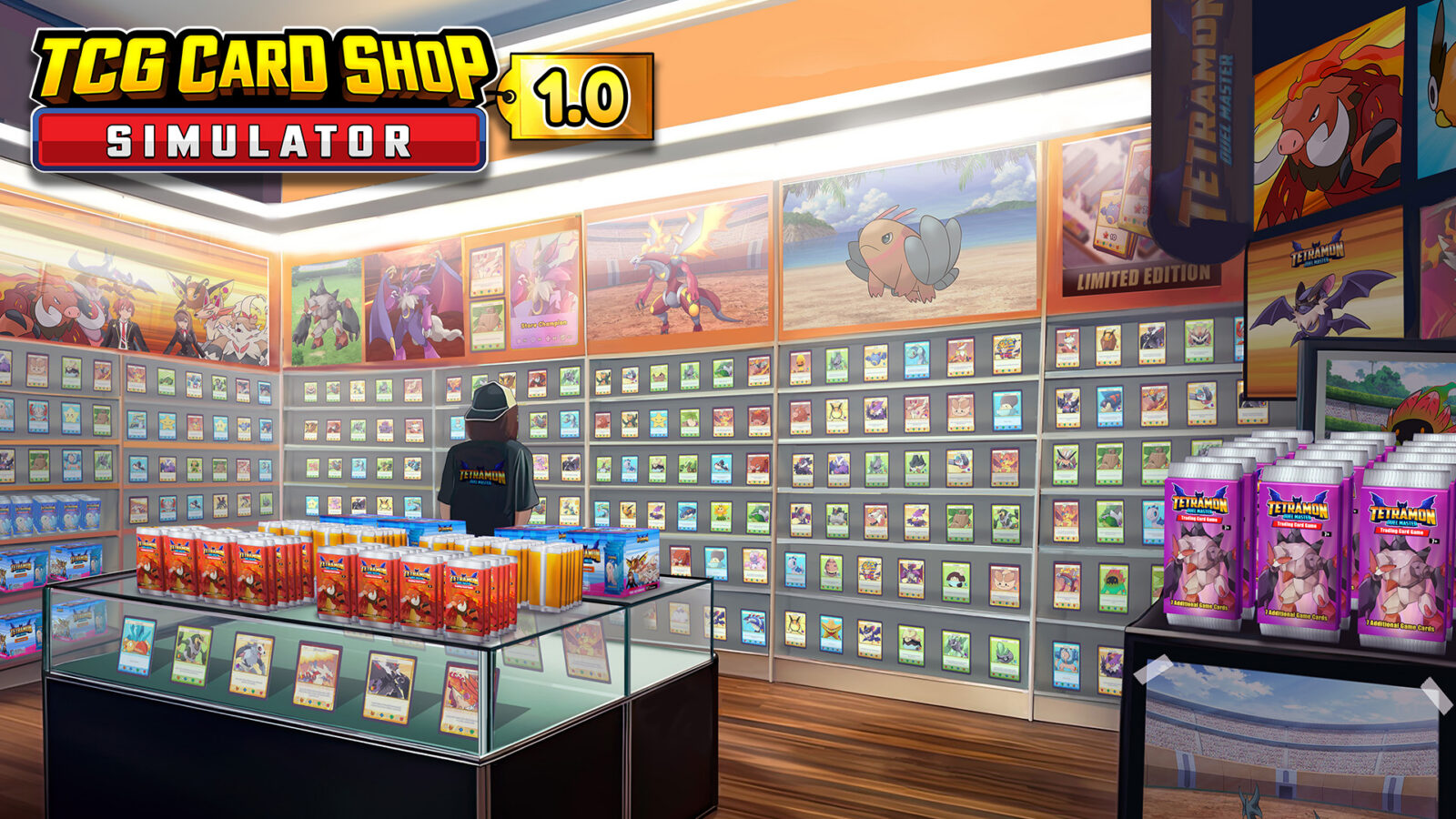
Master the TCG Card Shop Simulator workbench to turn bulk cards into profit. Learn box tiers, pricing strategies, and efficiency tips for your card shop.
Managing a successful hobby store requires more than just selling rare holos. As your inventory grows, the tcg card shop simulator workbench becomes an essential tool for clearing out low-value inventory. If you've ever felt overwhelmed by thousands of common cards cluttering your binders, understanding the tcg card shop simulator workbench is the key to maintaining a clean shop and steady cash flow. While high-value singles bring in the big bucks, the "chaff"—those cards worth only a few cents—can quickly become a management nightmare.
In this comprehensive guide, we will break down how to optimize your tcg card shop simulator workbench operations. We will cover the specific price ranges required to trigger different box tiers, the profitability of bundling versus selling singles, and community-sourced strategies to ensure you aren't losing money on every transaction. Whether you are aiming for the elusive "Green" tier boxes or just trying to clear space for the next Tetramon Destiny set, this guide provides the data you need to succeed.
What is the TCG Card Shop Simulator Workbench?
The workbench is a specialized piece of furniture that players can purchase via the "MY DIY" app on their in-game phone. Priced at $1,000, it represents a significant early-to-mid-game investment. Unlike display stands or card tables, the workbench is a functional utility station used to package individual cards into "Bulk Card Bundles."
Each bundle consists of 100 cards. The primary purpose of the tcg card shop simulator workbench is to automate the removal of low-value cards from your collection. Selling cards individually at a card table is profitable, but it is also time-consuming. A customer might spend several minutes deciding on a $0.10 card, whereas a bulk box sells as a single unit, freeing up your card tables for high-value Legendary or Epic pulls.
Quick Answer
The workbench turns 100 loose cards into a single sellable box. The quality (and price) of the box is determined by the market value of the cards you put into it. It is the best way to gain XP and clear out "junk" cards that take too long to sell individually.
How to Create Bulk Card Bundles
Operating the tcg card shop simulator workbench requires a bit of menu navigation. Once you have placed the workbench in your store (ideally in a backroom or a dedicated "work area" to save floor space), you can interact with it to bring up the bundling interface.
Step-by-Step Bundling Process
Select the Expansion: Choose between Tetramon Base, Tetramon Destiny, or Tetramon Ghost. Note that Ghost bundles are currently very difficult to make due to the high base value of those cards.
Filter by Rarity: You can choose "Any," "Common," "Rare," etc. Most veteran players recommend selecting "Any" to clear out all low-value cards regardless of their rarity tag.
Set the Price Range: This is the most critical step. You must define a minimum and maximum market value for the cards to be included.
Cards to Remain: Set how many copies of each card you want to keep in your binder. Community Tip: Many players report a bug where setting this to "1" can occasionally empty the slot entirely. Setting this to "2" is a safer way to ensure you always have at least one copy for your personal collection or Steam achievements.
Bundle: Press the bundle button. The process takes approximately 5 seconds per box.
Setting
Recommended Value
Reason
Expansion
Tetramon Base / Destiny
Most common cards found here.
Rarity
Any
Simplifies the clearing process.
Min Price
$0.01
Ensures even the cheapest cards are removed.
Max Price
$1.00 - $5.00
Depends on which box tier you are targeting.
Remain
2
Avoids potential inventory bugs and keeps a backup.
Understanding Box Tiers and Acronyms
The type of box produced by the tcg card shop simulator workbench is determined by the value of the cards included. Specifically, the game looks at the least valuable card in the bundle to determine the tier. If you put 99 cards worth $10 and one card worth $0.05, you will likely receive a White (Base) box.
Players have noted several acronyms on the boxes, such as HG, MG, and PG. While the developer hasn't explicitly defined these, the community generally interprets them as:
HG: High Grade (Yellow)
MG: Medium Grade (Pink)
PG: Premium Grade (Red)
UG: Ultra Grade (Green)
Base Set Value Ranges
According to player experience and wiki data, here are the approximate market values for Tetramon Base bundles:
Box Color
Acronym
Card Price Range
Estimated Box Value
White
N/A
$0.00 - $0.99
$10.00 - $12.00
Yellow
HG
$1.00 - $1.99
$60.00 - $70.00
Pink
MG
$2.00 - $3.99
$120.00 - $180.00
Red
PG
$4.00 - $11.99
$260.00 - $350.00
Green
UG
$12.00+
$900.00+
Destiny Set Value Ranges
The Tetramon Destiny set generally yields higher box values because the individual cards are worth more on the open market.
Some players argue that the workbench is a "money pit." If you bundle 100 cards worth $0.15 each, the raw value of the cards is $15.00. If the resulting White box only sells for $11.00, you have technically lost $4.00, plus the $1,000 cost of the workbench and the floor space it occupies.
The Argument For (The "Time is Money" Strategy)
Experienced shop owners view the tcg card shop simulator workbench differently. "Raw value" is meaningless if the cards never sell.
Transaction Speed: Selling one box at $12 is faster than processing 100 separate transactions at the register for $0.12 each.
XP Grinding: Bundling and selling boxes provides massive XP gains. Some players report hitting Level 80 significantly faster by constantly churning bulk boxes.
Inventory Management: It keeps your binders clean, making it easier to find the $500+ cards that actually drive your profit margins.
Maximize Your Margins
Always set your box prices to Market Price + 10%. Customers in this simulator are surprisingly willing to pay a premium for bulk bundles, which helps offset the "loss" of the individual card values.
Shop Layout and Space Optimization
As your shop expands, space becomes your most valuable resource. The tcg card shop simulator workbench takes up a fair amount of room, roughly equivalent to two wire shelving units.
Creating a Dedicated Work Area
Initially, you might place your workbench in the middle of the store. However, as you unlock more expansions (like Room B or Room C), you should move your "production" items to the back.
Shelf Snapping: A recent update fixed the "Warehouse Shelf" snapping issues. You can now place shelves directly against the wall, allowing you to store empty boxes and completed bulk bundles more efficiently.
The "Ikea" Method: Some players turn their backrooms into a warehouse style, with rows of shelves specifically for different box colors. This allows you to quickly restock the front of the store whenever a bulk shelf goes empty.
The Bulk Shelf Setup
Don't mix your bulk boxes with high-end merchandise like playmats or expensive deck boxes. Dedicate one or two small shelves specifically to the output of your tcg card shop simulator workbench.
Bottom Shelf: White boxes (Low margin, high volume).
Middle Shelves: Yellow and Pink boxes.
Top Shelf: Red and Green boxes (High margin, low volume).
Advanced Strategies for Veteran Players
Once you have mastered the basics of the tcg card shop simulator workbench, you can start fine-tuning your operation for maximum efficiency.
Precise Price Ranging
Instead of using broad ranges like $0 to $5, try using exact ranges to target specific box colors. For example, if you have a surplus of cards valued between $1.10 and $1.50, set your workbench to exactly $1.01 to $1.99. This ensures you are producing Yellow (HG) boxes without accidentally including a $2.05 card that would have been better suited for a Pink (MG) box.
The "Card Opener" Synergy
To keep the workbench running, you need a constant supply of cards. Using the "Card Packaging Machine" or "Auto Card Opener" allows you to process hundreds of packs daily. The "trash" from these packs goes straight into the workbench, while the "hits" go into your display cases. This creates a closed-loop system where every pack opened contributes to your shop's growth.
Handling "Ghost" Cards
Tetramon Ghost cards are currently the most valuable in the game. It is generally not recommended to use the tcg card shop simulator workbench for Ghost cards unless you are in the extreme end-game. The base value of even the most common Ghost cards is often high enough that bundling them results in a significant financial loss compared to selling them as singles.
Common Mistakes to Avoid
Ignoring the Market Price: Card prices fluctuate daily. A range that produced Pink boxes yesterday might produce Yellow boxes today. Check the workbench sliders frequently.
Over-stocking White Boxes: While they clear inventory, they sell slowly. Don't fill your entire store with $12 boxes, or you won't have room for the $2,000 singles that pay the bills.
Forgetting to Pay Bills: The workbench is a high-volume operation. You will be making many small sales, which can distract you from the daily $500+ rent and utility bills.
The "1 Card" Bug: As mentioned, community reports suggest that the "Minimum Cards to Remain" setting can be finicky. Always keep at least 2 to be safe.
FAQ: TCG Card Shop Simulator Workbench
Does the workbench increase my shop's level?
Yes! Creating and selling bulk boxes via the tcg card shop simulator workbench is one of the most effective ways to gain XP. While the profit per card might be lower than selling singles, the sheer volume of transactions helps you level up faster, unlocking better furniture and rarer card packs.
What is the difference between HG, MG, and PG boxes?
These acronyms represent the "grade" or tier of the bulk box. HG (High Grade) is Yellow, MG (Medium Grade) is Pink, and PG (Premium Grade) is Red. The tier is determined by the minimum market value of the cards inside the 100-card bundle. Higher tiers sell for significantly more money.
Why is my workbench producing the wrong color box?
The box color is determined by the least valuable card in the bundle. If you set a range of $0.01 to $10.00, and the workbench pulls even one card worth $0.05, the entire box will likely be downgraded to a White tier. To get higher-tier boxes, you must set a higher "Minimum Price" in the workbench settings.
Is the $1,000 cost worth it for a new shop?
For a brand-new shop, $1,000 is better spent on licensing new card sets or buying more display tables. However, once you reach the point where you have thousands of cards under $0.20 cluttering your inventory, the tcg card shop simulator workbench becomes a mandatory purchase to keep your shop organized and efficient.
By following these strategies, you can transform your tcg card shop simulator workbench from a simple furniture item into a powerhouse of efficiency. Don't let your "trash" cards go to waste—bundle them, tier them, and watch your shop's reputation and bank account grow.