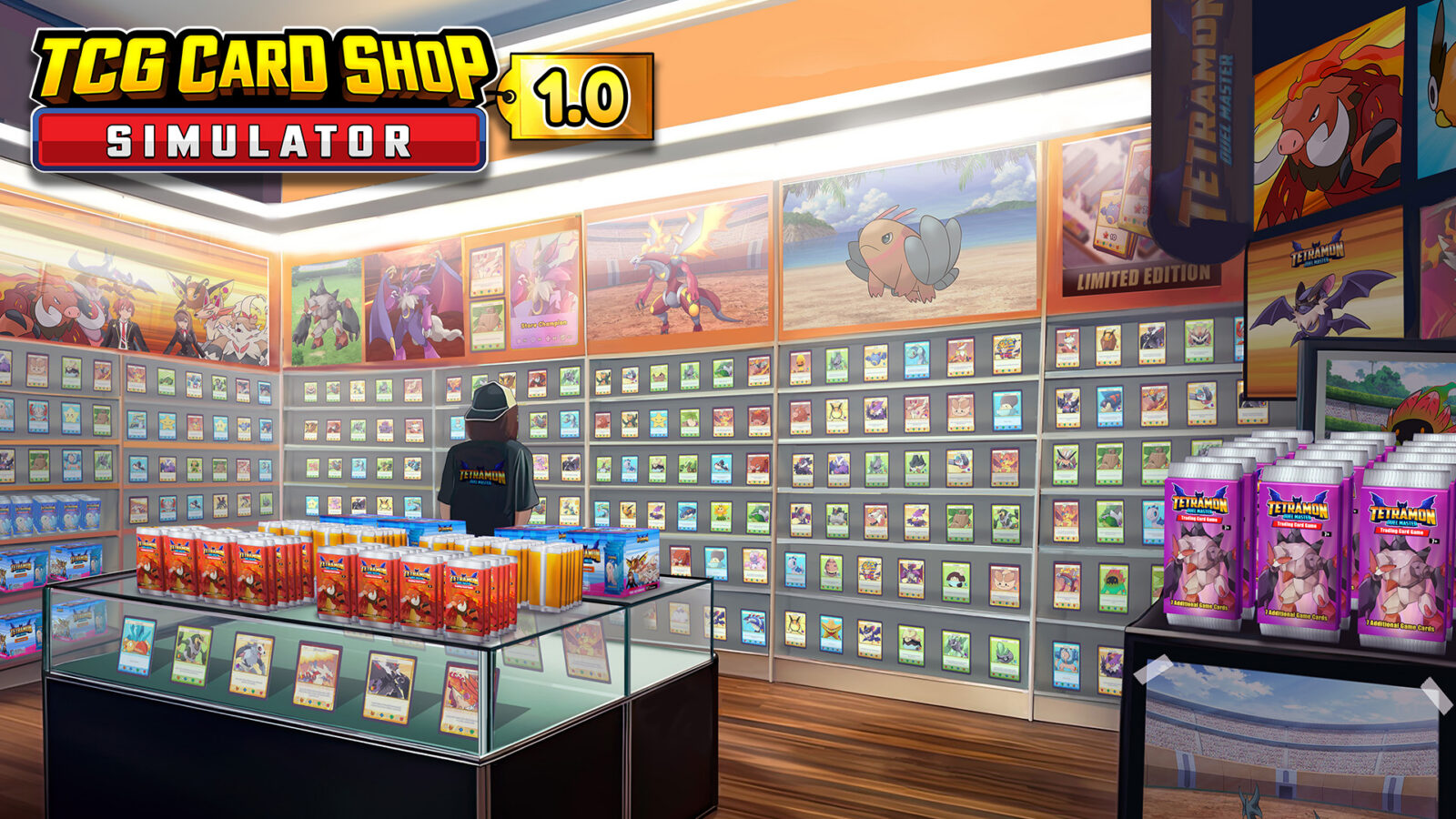
TCG Card Shop Simulator Max Level Guide: Leveling Tips
Want to reach the TCG Card Shop Simulator max level? Discover effective XP strategies, item management tips, and shop optimization techniques to level up fast.
Published:
Table of Contents
Running a thriving trading card business is more than just stacking shelves; it is about scaling your empire to achieve the TCG Card Shop Simulator max level. As you climb the ranks, understanding the game's progression mechanics is essential to unlocking high-tier rewards and expanding your store capacity.
Reaching the high levels is crucial because it directly influences your store’s growth, such as unlocking new product licenses and building major store expansions. In this guide, we explore the most efficient strategies to accelerate your leveling speed while managing your shop like a true professional.
How XP Works in TCG Card Shop Simulator
To reach the TCG Card Shop Simulator max level, you must first master the art of earning experience points (XP). Experience is the lifeblood of your store's growth. If you are struggling to move past the mid-game, it is likely because your XP-per-day ratio is suboptimal.
According to community data and game mechanics, XP is earned through four primary activities:
Customer Transactions: Completing sales at the register.
Opening Card Packs: The rarity and edition of cards inside significantly impact your XP gain.
Play Tables: Having customers complete matches at your store's play tables.
Stock Purchases: Every item bought through your phone apps provides a flat 5 XP, though this is supplementary to sales.
XP Yield by Card Edition
Understanding which cards offer the best return is vital. The following table illustrates the XP breakdown based on card editions:
Edition
Non-foil XP
Foil XP
Basic
1
8
1st Ed.
2
16
Silver Ed.
6
48
Gold Ed.
8
64
EX
15
120
Full Art
18
144
Ghost
18
144
The "Eight-Item" Method for Rapid Leveling
For players looking to maximize their daily XP, the "Eight-Item" strategy is widely regarded as one of the most effective techniques. By controlling your store’s inventory to influence customer target lists, you can force the game to prioritize the items you want to sell most.
Setting Up the Strategy
Restrict Product Selection: Limit your shelves to exactly eight high-value items.
Target List Influence: Because 60% of your customers follow a target list based on your inventory, they are guaranteed to look for these specific items.
Pricing: Set all prices to 20% below market value to ensure rapid sales turnover.
Automate: Ensure you have enough cashiers and stockers to handle the increased traffic, allowing you to focus on ripping packs.
The Level 60 Threshold
Experienced players report that this method is most effective once you hit level 60. If you are below this level, consider sticking to a one-item strategy until your shop infrastructure can support higher volume.
Managing Customer Purchasing Power
A common frustration among shop owners is having expensive items in display cases that never sell. Community reports clarify that customers have a hard limit on how much they can spend, which scales with your shop level and expansions.
The general formula for maximum base wallet size is: 100 + 100L + 250A + 500 + 400*B, where L is your visible level, A is expansions, and B is Shop B expansions.
Customer Wallet Tiers
Spawn Type
Chance
Wallet Range
Base
95%
20 to calculated max
Rare
4.7%
40 to 2x calculated max
Super Rare
0.3%
300 to 4x calculated max
This explains why, even at high levels, some items—particularly graded Ghost cards—may sit for weeks. If an item exceeds the 120,000 credit cap, even a wealthy customer cannot afford it. Keep your stock aligned with your current shop level to ensure consistent cash flow.
Leveling Milestones and Unlocks
Progression is not linear, and not every level rewards you with new features. However, hitting specific milestones is key to managing your staff and storage effectively.
Key Progression Milestones
Level
Unlocks / Significant Rewards
2
Shop A: Expansion 1
10
Zackery Cole (Employee)
15
Shop Lot B Access
20
Dennis Brandon (Employee)
50
Big Card Display
Always prioritize purchasing expansions when they become available. They not only increase your customer foot traffic but also raise the maximum possible wealth of customers entering your shop, allowing you to sell higher-tier cards later in the game.
Common Mistakes to Avoid
Even veterans fall into traps that slow their climb to the TCG Card Shop Simulator max level. Here are the most frequent pitfalls:
Ignoring Pathing: If your employees have to walk long distances to restock, you lose valuable sales time. Use shelves to block off inefficient paths in your storage room.
Overstocking Variety: While it looks nice to have a full variety store, having too many different items dilutes the target list logic, making it harder to predict what your customers will buy.
Neglecting Employees: Always check your staff's restocking speed. High-level play requires high-level efficiency; do not let a slow worker bottleneck your entire operation.
FAQ: Reaching the Max Level
Q: Is there a hard cap on the level in TCG Card Shop Simulator?
A: While new features stop unlocking after level 80, the game continues beyond that point, with achievements associated with reaching level 100 and beyond.
Q: Why are my expensive cards not selling?
A: Your customers likely do not have enough money. Check the shop level-based wallet formula; if your card price exceeds the maximum possible customer wallet, it simply won't sell until the market shifts.
Q: What is the fastest way to get XP?
A: The most reliable way to reach the TCG Card Shop Simulator max level is a combination of the eight-item sales method for constant XP and mass-opening high-rarity card packs.
Q: Do display cases sell items?
A: No, items in display cases are purely for show. Only items placed on sales shelves or card tables will be purchased by your customers.